
A back boiler is built into the fireplace opening. When it becomes faulty or inadequate, the question is not only “which boiler?” but “where can the new one actually go?”. That second question is where most of the planning, and most of the surprises, sit.
What decides where the boiler can go
1. The flue. A boiler has to discharge its combustion gases safely outside. The flue has a maximum length, can only turn so many times, and the terminal (the outlet) must sit a minimum distance from windows, vents, corners and boundaries. The manufacturer’s instructions set these distances. A location that looks perfect inside may be impossible on the outside wall.
2. The condensate drain. A condensing boiler produces acidic water that must be drained away. It is normally taken to an internal waste or soil stack. If it has to run outside, it needs to be protected from freezing. A route to a drain often decides between two otherwise equal sites.
3. Pipework and gas supply. The further the boiler is from the old position, the more pipework to run for gas, heating flow and return, and hot water. Floors, ceilings and finished decoration all influence the cost and disruption.
4. Access and clearances. The boiler needs space around it for servicing, and cupboards need the clearances and ventilation stated in the manufacturer’s instructions. This matters most if you plan to box it in.
5. The old opening. After a back boiler comes out, the fireplace is left with a void. It may need to be made good, vented or sealed depending on whether you keep an open fire, fit a different fire or close it up.
Real example: the boiler moved into the living room
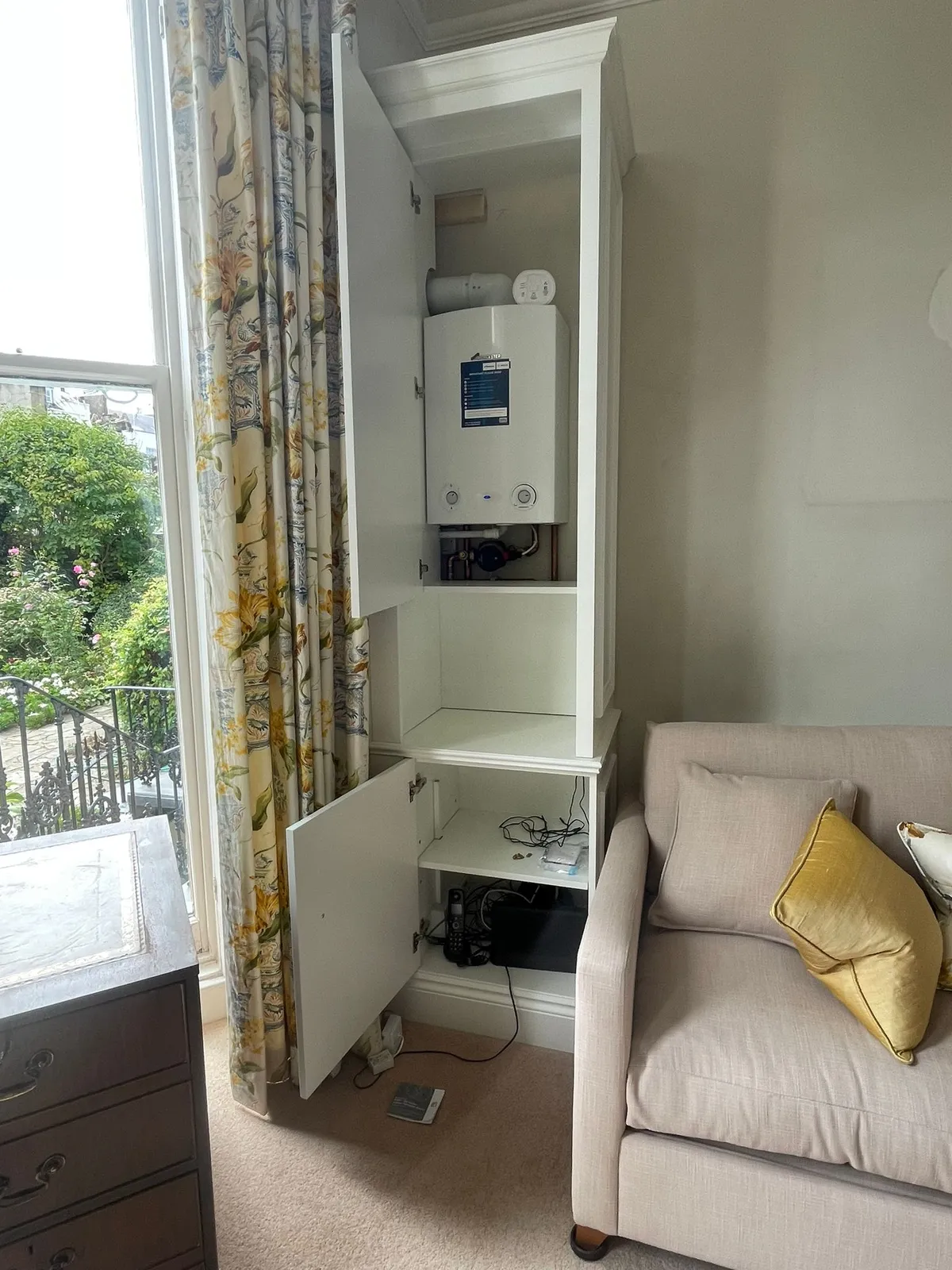
One of our Leighton Buzzard customers needed a boiler change after their old back boiler had become faulty and inadequate. The new boiler had to be moved into the living room. To avoid an eyesore, we had a custom unit made by a local business that matched the style of the room. You can see the result in the photo above, and in our work gallery.
The lessons from that job apply more widely:
- If the boiler must be in a visible room, treat the cabinet as part of the design. A purpose-made unit in the room’s style looks like furniture.
- Plan the cabinet and the flue together. The unit needs the clearances and ventilation required by the boiler, plus doors or panels that open fully for servicing.
- Keep the visible pipework to a minimum. Hidden runs in the unit and neat routes are the difference between “installed” and “finished”.
Check the engineer, not just the quote
Gas work can only be carried out by a Gas Safe registered engineer. When someone comes to quote:
- Ask to see their Gas Safe ID card, and check the back of the card to confirm they are registered for the type of work (for example, natural gas boilers).
- Ask what they will do about the flue route and condensate drain, before they quote, not after.
- Ask what is included for making good the old fireplace and any floors and walls.
- Ask for a Building Regulations compliance certificate at the end. A registered installer arranges this as part of the job.
Guarantees: read the small print
Many boiler brands offer extended guarantees, and the terms vary by model. As an example, Worcester Bosch lists longer guarantee periods for models such as the Greenstar 8000+ (up to 12 years) and Greenstar 4000 (up to 10 years). The longer lengths require installation by an accredited installer, and higher tiers require a system filter. Servicing requirements are worth checking too. Always read the current terms for the boiler you are buying, and ask your installer to register the guarantee for you.
Hard water and your new boiler
Leighton Linslade is a hard water area, which affects boilers over time. Ask about a system filter and the manufacturer’s guidance on water treatment, and book annual boiler servicing. Our hard water guide explains the local picture.
Before you decide
Think of a back boiler replacement as three decisions in one: the boiler, its new home, and what happens to the old fireplace. Get all three considered at the quote stage. For a boiler and heating quote, see boiler replacement or get in touch.
Frequently asked questions
Can I replace a back boiler with a new boiler?
Yes. A back boiler is removed and a modern condensing boiler fitted elsewhere, often in a kitchen, utility, loft or a cupboard. The new location needs a safe flue route, a condensate drain and access for servicing.
Do I have to use a Gas Safe engineer?
Yes. By law, gas work must be carried out by a Gas Safe registered engineer. Ask to see their ID card and check it covers the work you want done.
Where does a condensing boiler's condensate go?
Condensing boilers produce acidic condensate water that must be drained, normally to an internal waste, soil pipe or a suitable external route that is protected against freezing. This is a common factor in where a boiler can be sited.
Will the new boiler be guaranteed?
Manufacturers set the terms. For example, Worcester Bosch's longer guarantee options require an accredited installer and, on higher tiers, a system filter. Check the current terms for the model you choose.