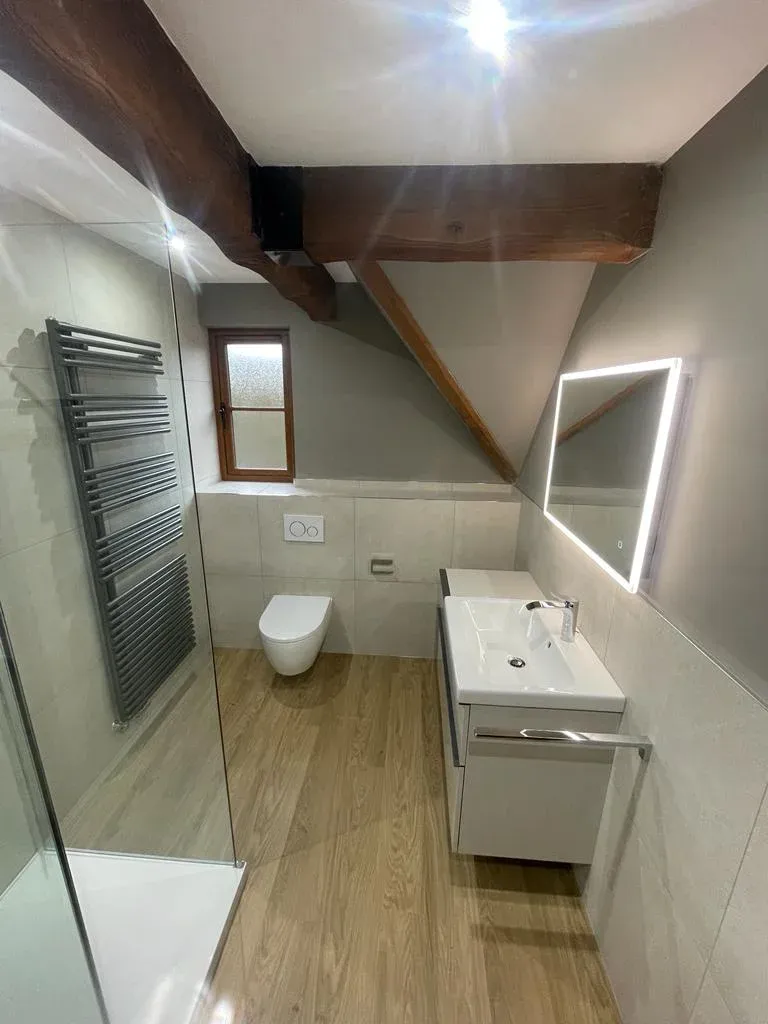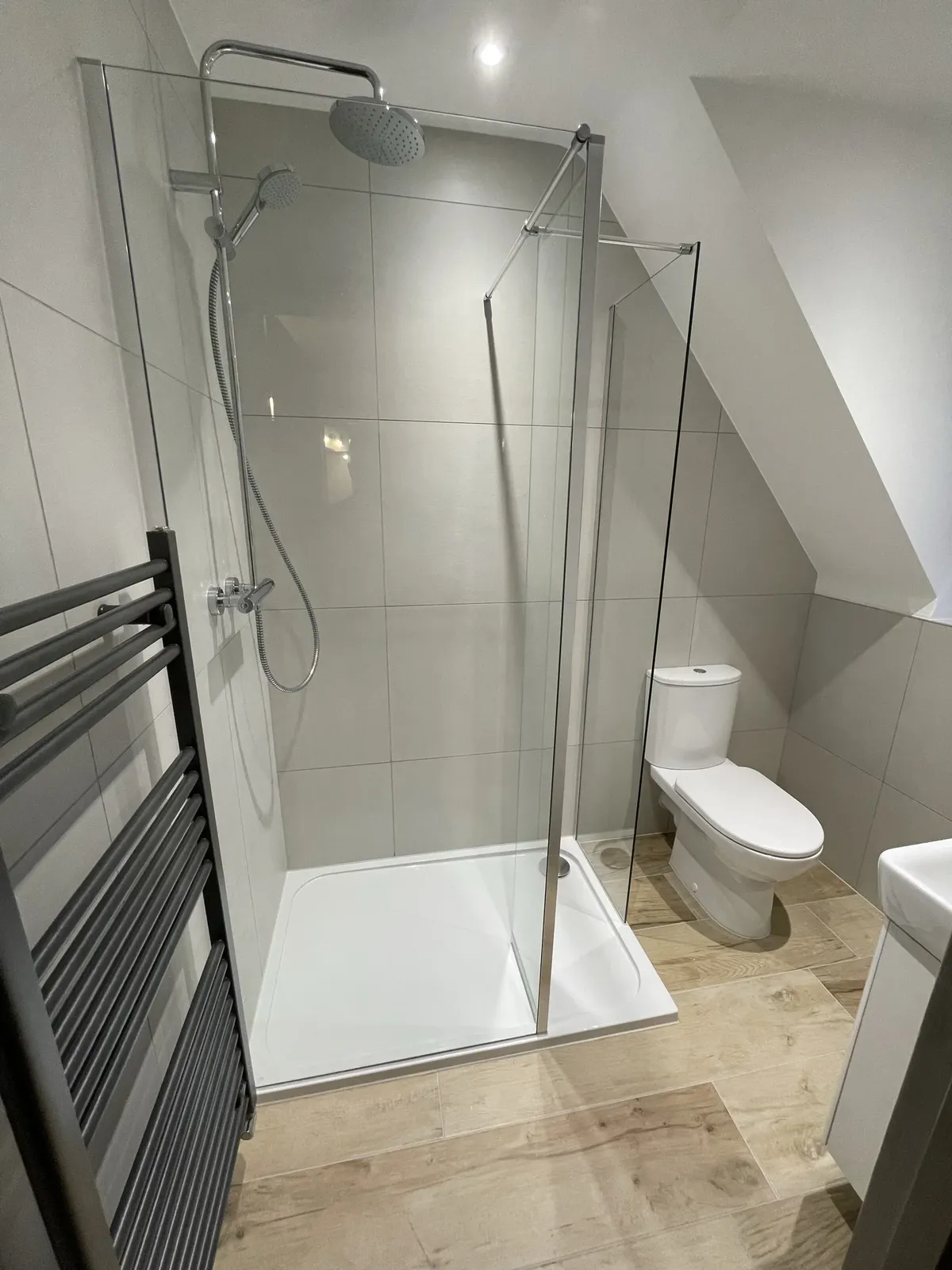

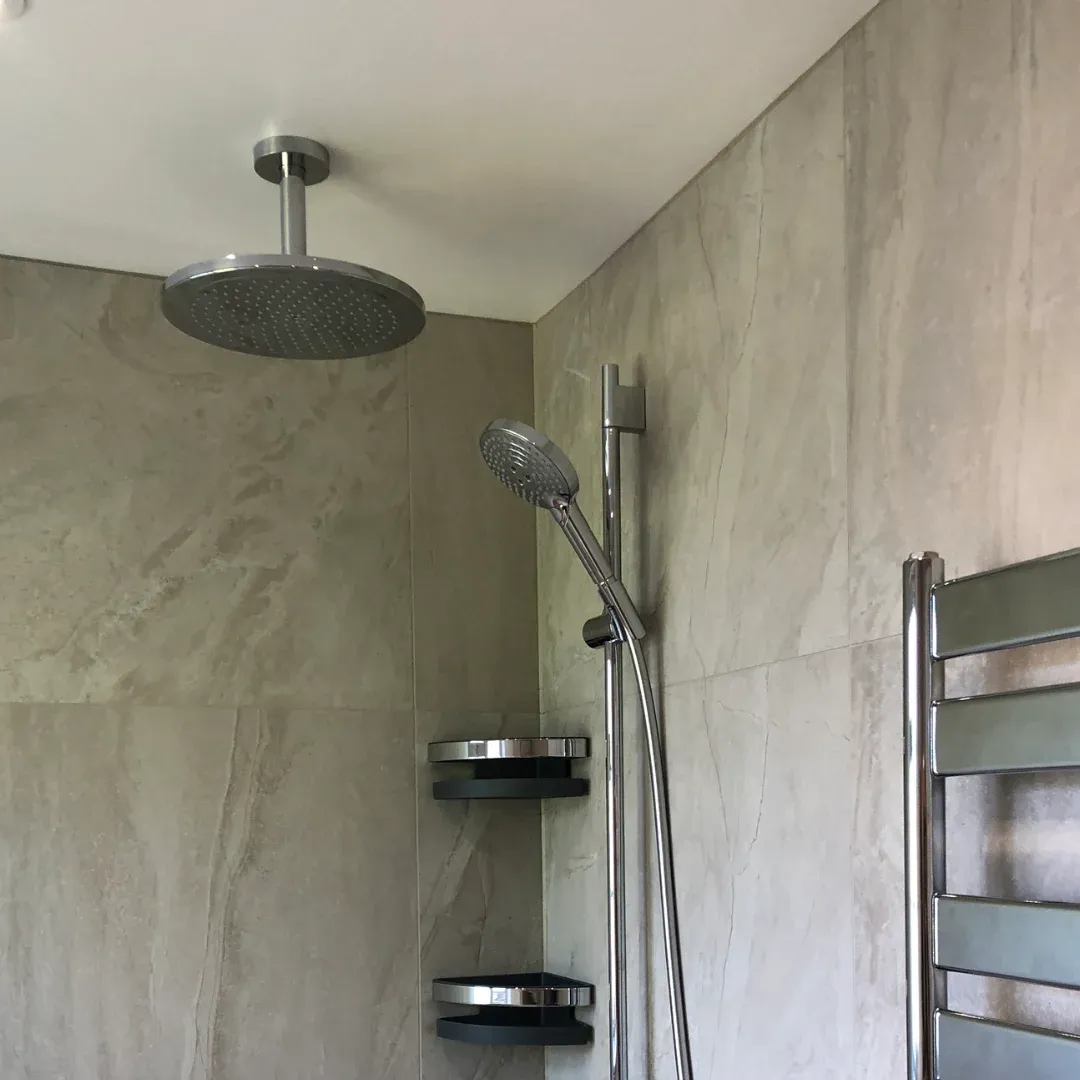
If you have a bathroom in Leighton Buzzard or Linslade, you are fitting it to hard water. That changes which materials look good after two years and which look tired after two months.
What the data says
Published tap water data for the LU7 postcode area puts the Leighton Linslade supply zone, supplied by Anglian Water, in the “at least hard” category. The 2025 figure on that source is at least 284 mg/l of calcium carbonate, which is roughly 19.9 degrees Clark. On the scale commonly used in the UK, 200 to 300 mg/l counts as hard and above 300 as very hard, so the local supply sits towards the top of the hard band.
Supply zones can differ street to street, so use your supplier’s postcode checker for your own address. The figures matter less than the practical point: scale will form, and your choices decide how visible and how costly it is.
What limescale actually does
On glass and tiles. The white film on shower screens and dark tiles is calcium carbonate left as droplets dry. It is harmless but looks neglected within days if the glass is not wiped.
On taps and shower heads. Scale builds in aerators and spray nozzles, so flow becomes uneven and eventually blocked. Chrome shows it less than black.
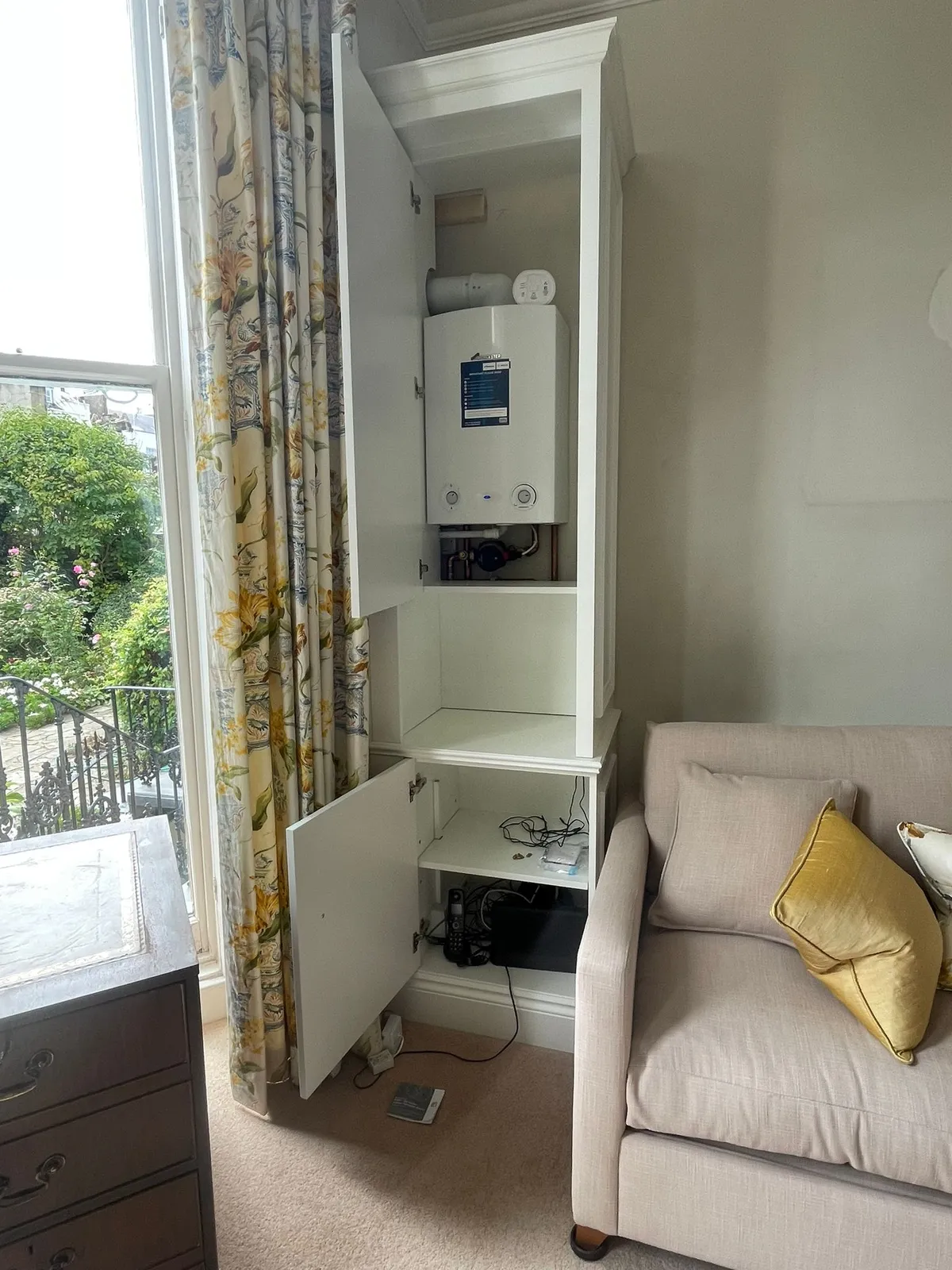
On heated surfaces. Scale forms fastest where water is heated. Boilers, hot water cylinders, immersion heaters and electric showers all have hot surfaces that collect it. In a boiler, scale on heat exchangers can reduce efficiency and cause faults. See our notes on boiler servicing.
Choosing a bathroom for hard water
None of these are rules, but they shift the odds in your favour.
- Think twice about matt black everywhere. Matt black fittings and dark glossy tiles look superb new and show white scale the most. If you want black, accept a wipe-down routine, or limit it to a few accents.
- Pick textured or mid-tone tiles. Large, slightly textured stone-effect porcelain hides marks far better than a mirror-finish dark tile.
- Keep grout joints few. Large-format tiles mean fewer joints to scrub, and a good sealed grout cleans more easily.
- Choose a shower head with silicone or rubber nozzles. You rub the scale off with a thumb.
- Make the screen easy to wipe. Frameless glass with few seals is quicker to clean than a framed enclosure with channels.
- Plan for ventilation. An extractor fan that actually runs reduces how long droplets sit and dry.
- Prefer accessible isolation valves and strainers. If scale blocks something, you want it reachable.
Water softeners, scale inhibitors and everyday habits
- Softeners swap calcium for sodium and directly remove the hardness. They need salt, an installation with a drain, and regular checks. They are usually plumbed so a kitchen tap stays unsoftened for drinking and cooking.
- Scale inhibitors (such as polyphosphate dosing) reduce how hard scale sticks. They are more modest than softening.
- Electronic or magnetic descalers. The evidence is mixed, so treat marketing claims with caution.
- Habits do more than any device: squeegee the glass after use, descale shower heads and taps every few months, and keep the room ventilated.
What it means for your boiler and hot water
If your boiler is old or you have noticed noisy kettling, loss of hot water performance or repeated faults, scale may be part of the story. When fitting or replacing a boiler, ask the installer about the manufacturer’s requirements for filters and water treatment, because a guarantee can depend on them. For example, Worcester Bosch’s longer guarantee periods require installation by an accredited installer, and higher tiers require a system filter. Always check the current terms for the model you are buying. See our guide to replacing or relocating a boiler.
A realistic summary
Hard water is not a reason to avoid a lovely bathroom. It is a reason to choose finishes you are happy to wipe, a layout that is easy to clean and a boiler setup that is maintained. If you are planning a refit, we will gladly talk through finishes at the design stage. Contact us or look through the gallery to see finishes in real bathrooms.
Frequently asked questions
Is the water hard in Leighton Buzzard?
Yes. Published tap water data for the LU7 area, supplied by Anglian Water, rates the supply zone at least hard, with at least 284 mg/l. You can check your exact postcode with your water supplier, because zones can differ.
Does hard water damage a boiler?
Limescale builds up on hot surfaces such as heat exchangers, which can reduce efficiency and, over time, cause faults. Regular servicing and following the manufacturer's guidance on filters and water treatment are the practical protections.
How do I stop limescale on my shower screen?
Wipe or squeegee the glass after each use, ventilate the room, and use a descaler regularly. A protective glass coating can help, but daily wiping does most of the work.
Is a water softener worth it?
It can be, particularly if limescale is shortening the life of appliances or causing constant cleaning. It has a cost, needs salt, and the system should be installed properly. Many homes keep one kitchen tap unsoftened for drinking.