
Most people searching for the cost of a bath to shower conversion want a number. The trouble is that the number depends on things you cannot see from the doorway, and two quotes for what sounds like the same job can be far apart. This guide explains what actually moves the price, how to compare quotes fairly, and a route that can take VAT off the bill that many homeowners never hear about.
We do not publish a single conversion price because it would be misleading. Our bathroom cost calculator gives guide ranges for full bathroom refits, and a measured visit gives a written figure for your room. If you are still deciding what to build, start with our guide to the decisions in a bath to shower conversion.
The shower is the small part of the cost
People tend to picture the cost as the shower: the valve, the head, the screen. In practice those are choices you control. The cost is mostly decided by what the bath was hiding, and by how much of the room has to be rebuilt around the new shower.
Five things decide it:
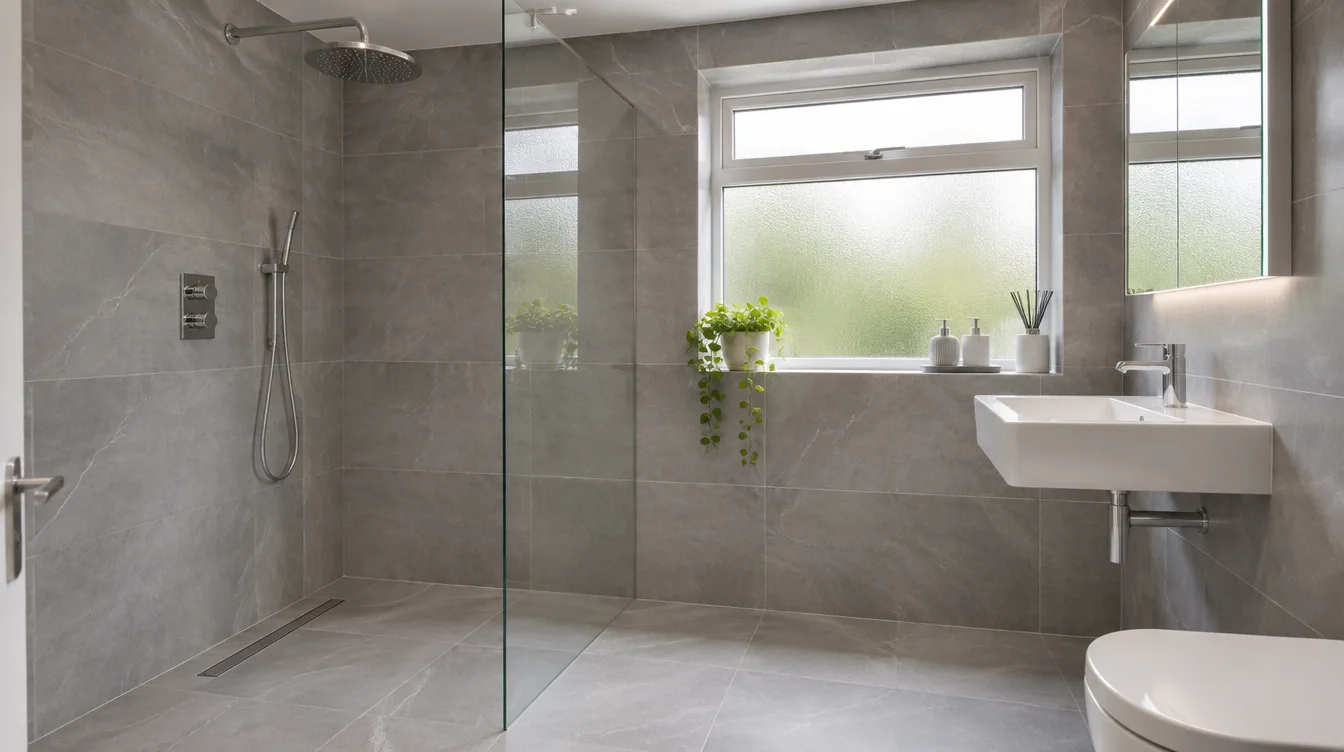
- The floor and waste. A low-profile tray in the old bath footprint is the simplest route. If the floor structure, the waste position or the fall of the pipe does not suit it, the work grows. A level access or wet room floor adds more again, as our guide to wet room or walk-in shower tray explains.
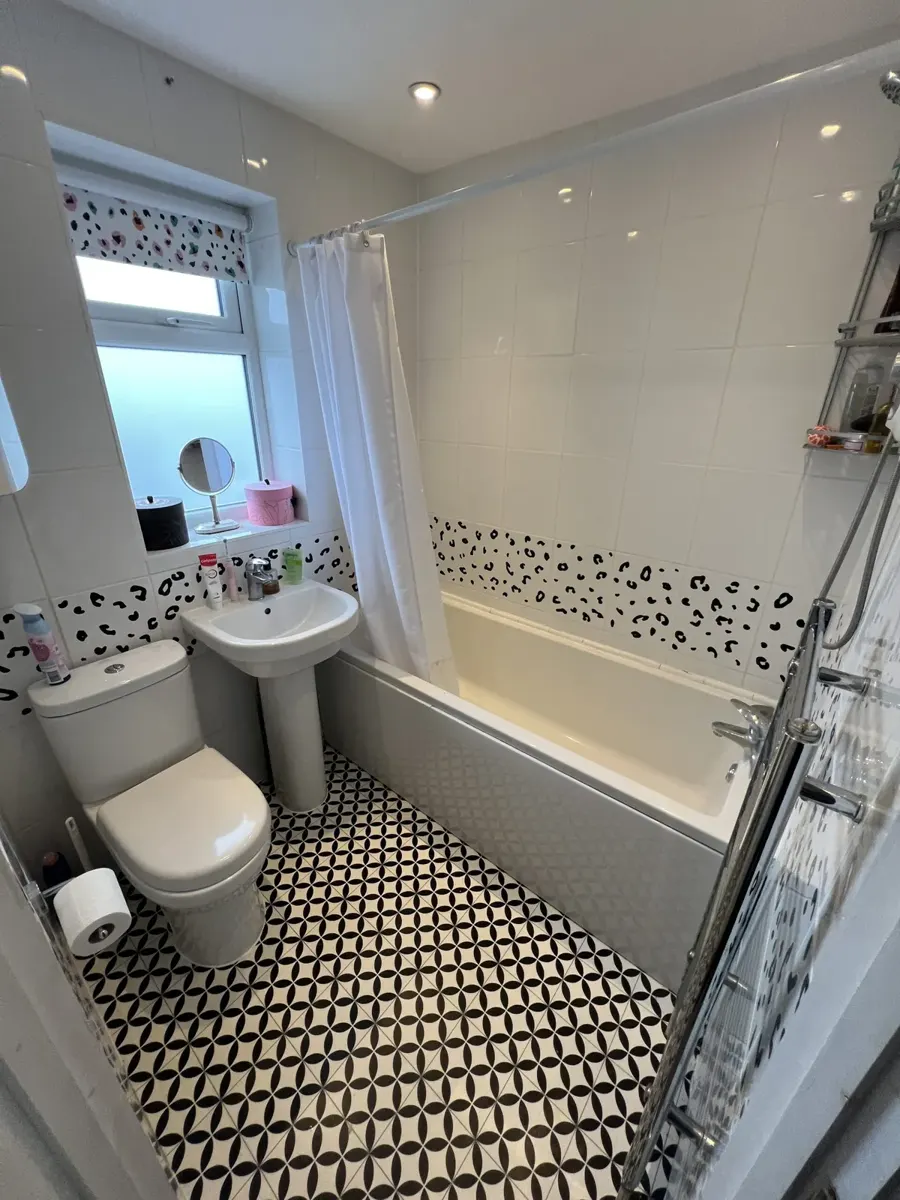
- The walls. A shower needs waterproof surfaces up to at least head height. If the bath was only tiled to the rim, new tiling and preparation run much higher than before, and the amount of tiling is one of the biggest swing factors.
- Pipework. Moving the valve to a sensible height, or changing from a bath mixer to a concealed valve, means working inside the wall.
- Electrics. An electric shower needs its own circuit. A new circuit is notifiable under Part P of the Building Regulations, which affects who can do the work and what certificate you should receive.
- Making good. The footprint of the old bath often leaves unfinished flooring and walls. Putting the room back to a finish you are happy with is a real line in the quote.
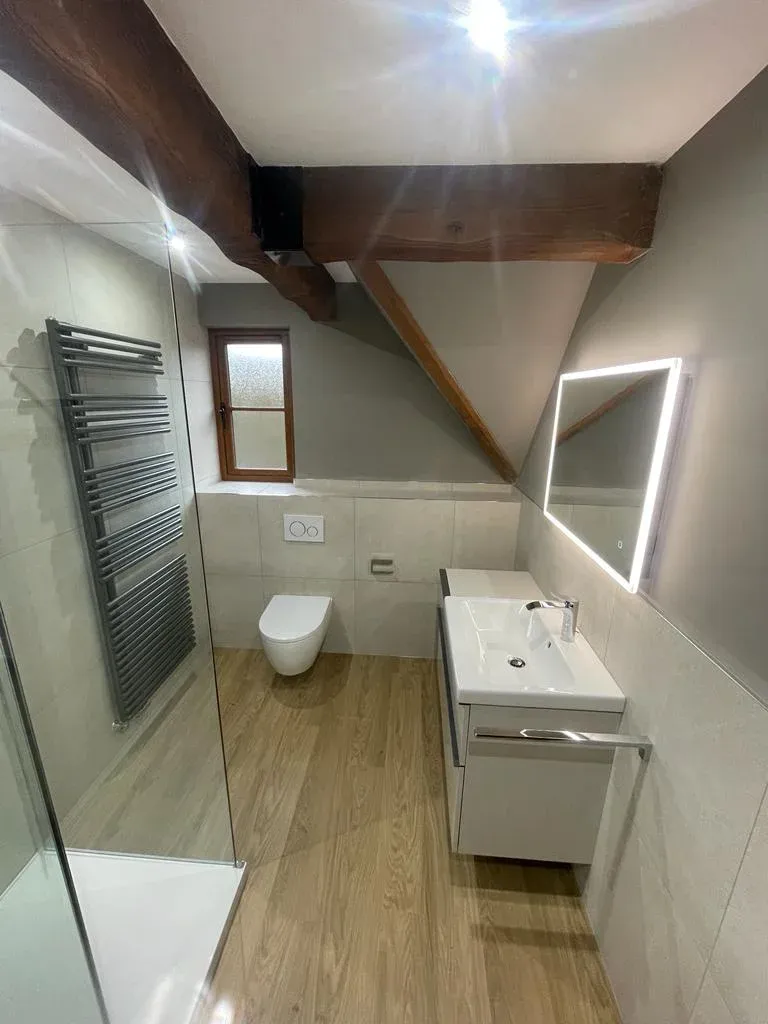
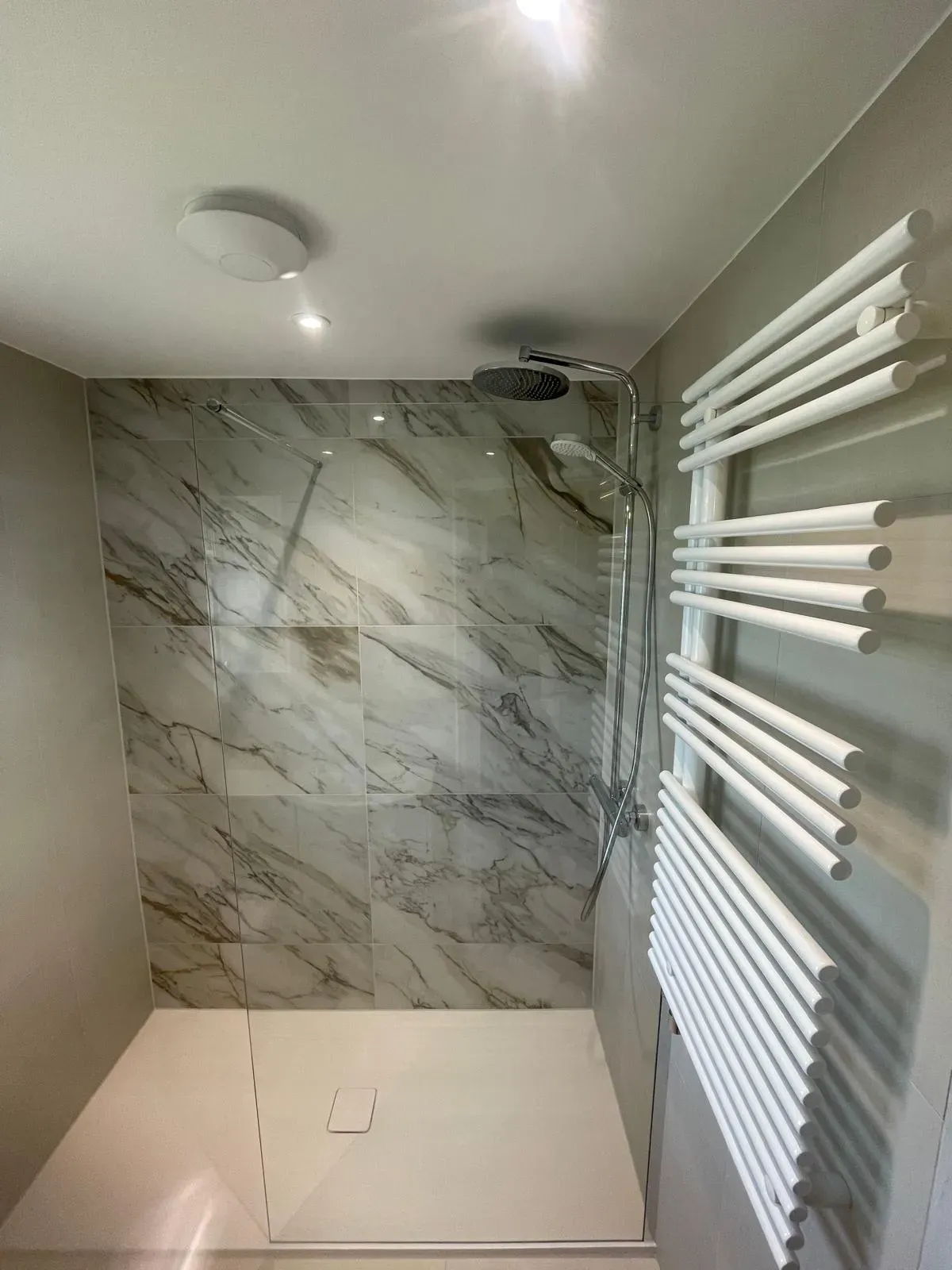
The shower type, glass and finish then add or subtract on top of that base. A made-to-measure glass screen, a larger tray or stone-resin base, and large-format porcelain all push the figure up. A simpler tray, standard-size panels and a smaller tiled zone bring it down.
A checklist for comparing quotes
When quotes arrive, do not compare totals. Compare what is included. A conversion quote should say, in plain words, whether it covers:
- Removal and disposal of the bath, and making good of the floor and walls.
- The valve and outlet, and which type of shower the flow test supports.
- The tray, or the deck and waterproofing system for a wet room, and the waste.
- Wall tiling or panels, with the height and area stated.
- The screen, including that it is made to measure after the walls are finished.
- Any electrical work, with the certification route named.
- Redecoration of the affected walls and ceiling.
A quote that omits several of these is not cheaper. The cost simply turns up later as a variation. The easiest protection is to ask each firm to price the same written list.
The VAT route most homeowners miss
This is the part competitors rarely mention. If the shower is being fitted because you or someone living with you is disabled or chronically sick, the work may be VAT-free.
GOV.UK states that a new, extended or adapted bathroom, washroom or lavatory is VAT-free if the work is done to help you because of your disability. Its examples include replacing a bath with a shower or a walk-in bath if you have difficulty getting in and out of a traditional bath. Necessary preparation or restoration can qualify too: for a walk-in shower, GOV.UK says that can include replacing porcelain goods removed for the installation and any necessary re-tiling.
There are conditions, and they are strict:
- You must be chronically sick or disabled, meaning a physical or mental impairment with a long-term and substantial adverse effect on everyday activities, or a condition the medical profession treats as chronic sickness. A temporary condition does not qualify.
- The work must be in your own home, the place where you normally live.
- It must be because of the disability. Work that is “re-fitted, repaired or redecorated as a general home improvement” is excluded, and HMRC’s manual also excludes the “straightforward substitution of old sanitary ware for new”.
- Your supplier will normally ask for a written eligibility declaration, one per supplier. Do not send it to HMRC.
- There is no HMRC refund if VAT was charged in error. You would have to ask the supplier.
HMRC advisers cannot decide whether you qualify, and the line between an adaptation and a like-for-like swap can be a judgement call. So raise it with any contractor at the quoting stage, ask whether they can apply the relief, and check the GOV.UK page yourself before you sign. We are not tax advisers, and nothing here is a ruling on your situation.
Grants that can pay for the work
If the shower is needed for access, a Disabled Facilities Grant may also help. GOV.UK lists a level access shower among the adaptations it can fund. In England the maximum is up to £30,000 per applicant, though councils can top it up. It is means-tested on household income and on savings above £6,000, and it does not affect benefits. You apply through your local council, and you should wait for approval before any work starts. Our accessible bathrooms page covers the design side of step-free showers.
Questions to ask before you accept a quote
- What flow and pressure did you measure, and does the shower you have priced work with them?
- How high is the tiling, and who is making good the floor?
- Is the screen included, and how long will it take to arrive?
- Who certifies any electrical work, and will I receive the paperwork?
- If I qualify for VAT relief because of a disability, can you apply it?
If you want a written, itemised figure for your own bathroom, see our bath to shower conversion service or book a visit.
Frequently asked questions
How much does it cost to replace a bath with a shower?
There is no honest single figure, because it depends on the shower type, the tiling area, whether the floor or waste has to change, and any plumbing or electrical work. Our public bathroom cost calculator gives guide ranges for full bathroom refits. For a conversion on its own, a measured visit is what produces a reliable written quote.
Can I get a bath to shower conversion without paying VAT?
Possibly. GOV.UK says that replacing a bath with a shower or walk-in bath is VAT-free if you have difficulty getting in and out of a traditional bath because of a long-term and substantial disability or chronic sickness. The work must be done in your own home, it must be because of your disability, and you normally give your supplier a written declaration. It does not apply to a general home improvement.
Is a bath to shower conversion covered by a grant?
A Disabled Facilities Grant can help with a level access shower. In England it is up to £30,000, subject to a means test on household income and savings above £6,000, and you apply through your local council. Apply and be approved before any work begins.
Why do two conversion quotes differ so much?
Usually scope. One quote may include full-height wall tiling, waterproofing, a made-to-measure screen, making good the floor and electrical certification, and the other may not. Check the lists side by side before comparing totals.